Showing posts with label interdisciplinary. Show all posts

Friday, August 14, 2015

Documentation week 22: petri dishes, second incarnation

Following from my kiwifruit sculpture, I did a few more petri dish works, using other fruits/veggies and techniques...

A banana.
As they were cut into 5mm segments, the fruits/veggies each became 3 times its height when separated and stacked. I loved the ridiculousness of it.


I then realised that from the one banana, I could make 2 or 3 smaller ones simply by dividing the layers evenly. Above is one banana turned into two; every second dish separated.

The next experiment was removing the banana from its peel on each layer, resulting in one banana-flesh and one empty peel retaining its shape.


I did the same with a kiwifruit and tomato, taking only each 2nd/3rd segment to 'compress' the form back into a life-size height.
Then I tried stacking them all on top of each other. They were deliberately chosen for their colours - thinking here about 'traffic light' food labelling.


Wednesday, August 5, 2015

Conveyor belt art

I recently obtained a 3m long conveyor belt.
My uncle Trevor, of V3 - an exhibition equipment company - custom-made it for a client, for a one-off event, and apparently no one has any further need for it...


So, while thinking about what to do with it, I've been looking up other artists who have worked with conveyors...

Artist unknown

Emily Jacir, 2011. 'A closed-circuit conveyor belt going endlessly in circles.'


Aaron Flint Jamison, 'conveyor', 2013


Gabriel Lester
Flat as the World is Round, 2010
85 x 40 x 150 cm
Flat conveyor, simplified exemplar, motor, lamps

Flat as the World is Round (2010) is a metaphorical play with moving scenery in which the very prosaic construction of a conveyor belt at a supermarket checkout is transformed into the magical world of a shadow show. A continuous cycle shows us the different milieus we encounter in our everyday lives. This work subtly combines the medieval concept of a flat earth, which is now recognised as absurd, with elements of Plato’s cave allegory. It uses ironical and, above all, poetic means to present a world of shadows and illusions to an observer fascinated by the silhouettes on the wall.


Christine Wong Yap, Pounds of Happiness (conveyor belt), 2009, paper, neon gel pens, glitter pens, wood, motor, table, 48 x 34 x 24 inches / 122 x 86 x 61 cm
A kinetic sculpture that displays a looped drawing of pound store products drawn with pound store materials.

Monday, July 27, 2015

Gummo IV

‘SCULPTURE IS EVERYTHING’ ... AT GOMA

When I visited Brisbane in the summer I loved this kinetic sculpture by Lara Favaretto: 'Gummo IV'. It keeps popping into my mind lately.

Saturday, July 25, 2015

Food? exhibition

Jane and I proposed a group exhibition based on ideas around food.
The result was an exhibition this past week in Projectspace. We're all thrilled at how it went. The opening night was a hit, and the feedback during the week has been fantastic.

Attached is the list of works, and images

---


Food?                                                                                    Projectspace Gallery, 21-25 July 2015


Levi Brinsdon-Hall

Bought to you by Farro Fresh
fruit and vegetables. wooden bowl

Every night the show is running for, the artist will go and collect fruit and vegetables that Farro Fresh supermarket has thrown into their bins and will add them to this fruit bowl. 
Participants are invited to take whatever food they may want from this bowl and the following morning it will be replenished by the artist.
*Food has been washed in hot soapy water and then rinsed and dried with a clean towel. All food was thrown out in a fresh produce bag and therefore hasn’t been contaminated with meat or dairy, only other fruits and veg.


Emma Glučina

Golden mornings
coloured glass. plastic. margarine. 

I am interested in the routine of the everyday, where the body has marked an object in passing. Casting has become a tool in which allows me to record these impacts of the body on domesticated objects. By casting an object you ensure that the form will forever continue to exist, therefore all fleeting traces and imprints are caught in time or in a moment, capturing the memory of its mould. I find that this impermanence is fitting, especially in the case for something like food, as it eventually gets eaten, melts, or rots away. Casting for me has been a way of obtaining something that we naturally could not.


Jane Lehtinen

Implanted
headphones. mp3 player. sound piece, spoken by Gene Siewing


Nick Pound

Untitled
blackboard. paper. pins.


Dominique Nicolau (nico)

Survival Tabs/ Survival Blanket.
paper. golden survival/space blanket. flesh coloured gaffer.

I am not advocating Survival Tabs as a survival food replacement. They consist of mostly malt and
milk. There are better alternatives.

Polycaprolactone Balls.
sound.

Soylent.
company promotional video.

Twentythird 23 Evolution.
the ultimate meal replacement. glass dome vitrine. spray paint. golden survival/space blanket.
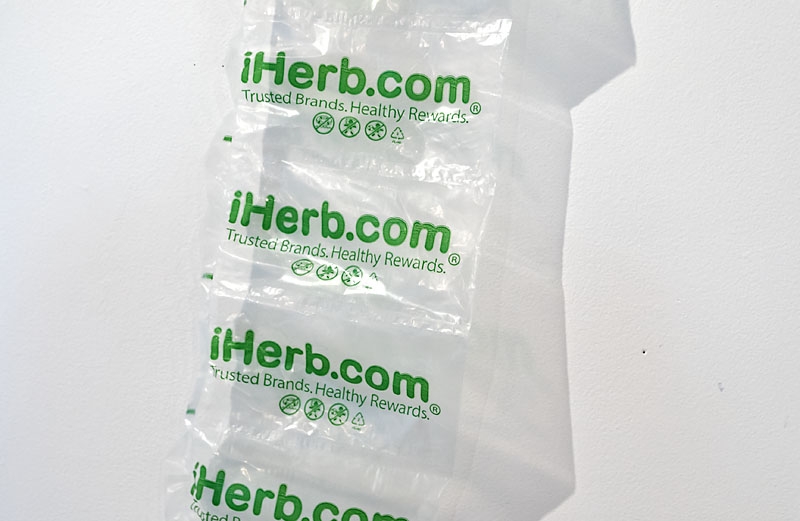
iHerb.com packaging. flesh coloured gaffer.

Manifest Destiny
plastic. dirty water. wax.

The people on board the Star-Arc did not eat food as we know it. They swallowed synthetic food tabs 6 times a day that contained all the nutrients their bodies needed. As well as a chewing gum to mimic the necessary masticating benefits of chewing food. They also daily swallow a synthetic fibre substance device made predominantly of self-lubricating Polycaprolactone in the form of a small ball, to massage the internal gastoentalogical systems. This is excreted daily, sanitised, re-filled with synthetic fibre and re-used. The socialisation of meal time was no longer an activity that Homosapians henceforth partook of. All the people on board were lean and toned.
Adapting to the food tabs was difficult for the 1st Generation. They all understood the necessity but they missed nothing as much as the missed the comfort of the sustenance of Earth food.


Ollie Roake and Jacqui Margetts

Conversation table
pallet wood. found chrome frame. modified to house conversation box.


Alison Sydenham

Publication editor, food?
140 pages. edition of 10.

Anything to declare?
screen print on cotton. (grocery bag)

Decisions
MDF. acrylic. (dominoes)

Bites
screen print on ply. metal. (rodent traps)

Caution: traps are set.


Ruby Chang-Jet White

Cockfight
bowl set (left, by artist) : slip clay, hand-painted. kauri chopsticks.


bowl set (right, by machines) : clay, machine printed. pine chopsticks.

Friday, July 24, 2015

WIP: Mouse and rat traps continued

continued from this post

"The next tests will...
-use sealed timber and less ink retarder with longer drying time; see if this prevents any of the ink from rubbing off.
-use spray varnish over the print + see if this makes any difference in retaining the detail"

I tried these; then decided that it is not worth the 'shiny' surface as the resultant darkening of the wood grain makes it look less like the original rodent traps. 
Comparing spray varnish to raw timber.

Left: spray varnish test. Right: GAC varnish (on top of ink.)

Left: GAC varnish underneath. Right: spray varnish on top.

Difference in surfaces - compared to original trap

Testing different inks and colours on raw timber. Top left is Aquaprint ink, bottom left is live to print (eco-friendly) ink - magenta; right x3 are live to print magenta+yellow (red mix) 


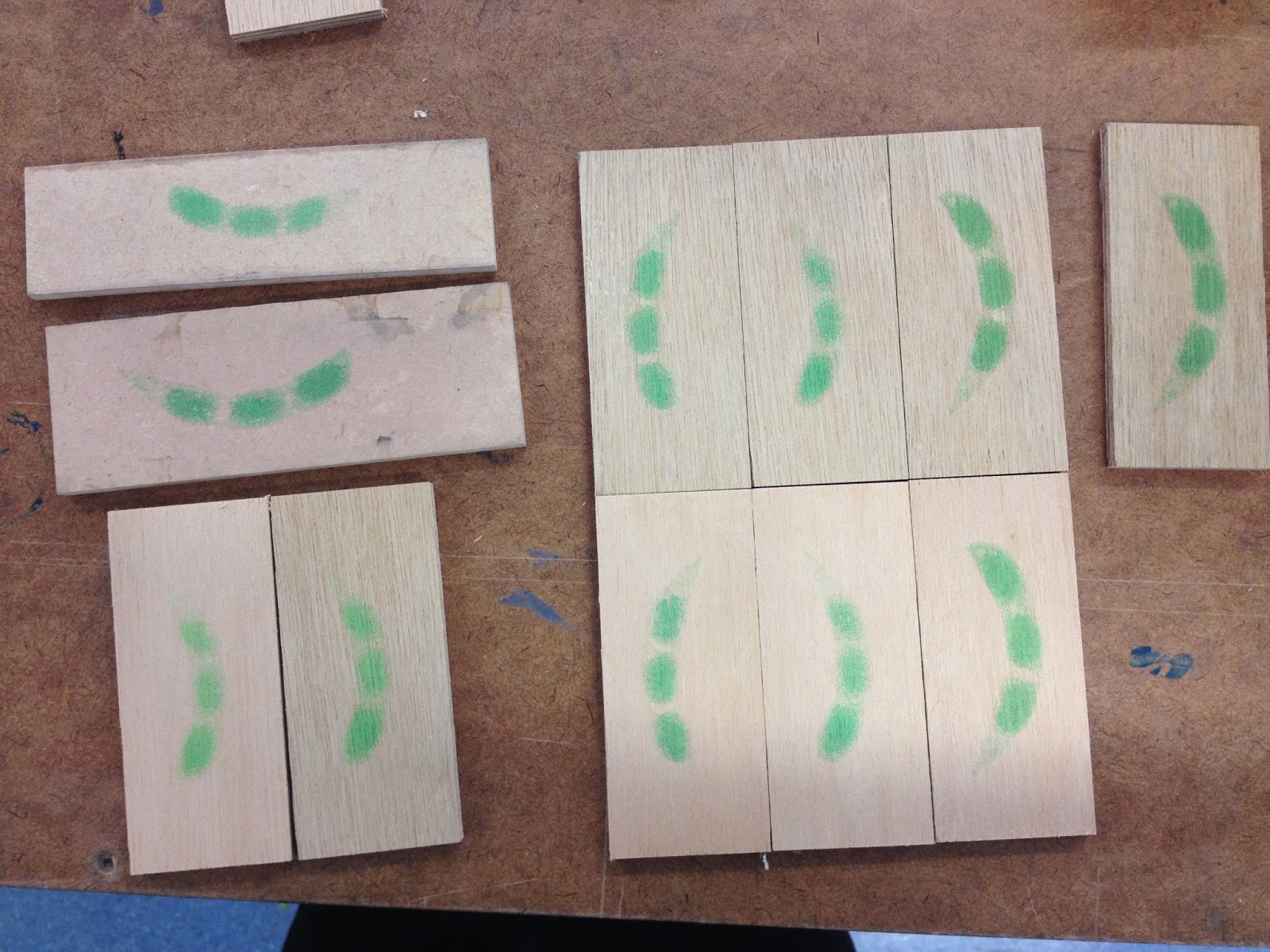
"-use green ink instead of red. I'm interested in the implications of the colour green (Green = go. Green = eco friendly, healthy, etc. Green = toxic.) and of course it is the natural colour of edamame beans. I imagine the resulting effect/message will be 'here is an inviting, seemingly healthy snack; but it's a trap.'"

Some green tests…
The first shade of green was representative of the slightly dark / earthier shade of edamame beans.
Struan suggested I use a more fluro / toxic shade of green to get this message across.


Re-shaping and sharpening all the staples (such a process):


And then trying to decide which colours to present:


While hammering the pieces together, and trying to make sure the contraption worked, I ended up trapping my fingers by accident. God it hurt. But I was really happy that it worked!
For the 'Food?' show, I displayed the red ones. The logic was that conventional red made them invisible. You have to look twice

The works on subtle display in the corners of Projectspace:


All four traps (one corn, 3 edamame) were set + activated, and a small note warned visitors not to touch them. Luckily no one did. Knowing they are activated is an important part of the work for me - this gives them a tension. They're almost invisible, but dangerous. Or perhaps just cheeky.  

Tuesday, July 14, 2015

WIP: Mouse and rat traps

  • Thinking about Judy's advice to print on other surfaces;
  • bringing back some elements of my (successful?) earlier work 'decisions' (re-imagining familiar objects, analogies, printing on wood);
  • thinking about rodents / animals for testing / pests / genetic modification / ethics, I thought about looking at mouse traps
  • I bought some traps and cut up some wood in a similar size/grain to the original base

Mouse and rat traps conventionally have a logo or image printed on the platform; usually red.
I think the form and size of the corn resembles that of a large rodent… it also sort of looks like an imprint, a blood stain.
Screen printing on wood:


Above: the first wood tests were sized to fit the entire image, although this looked a bit nonsensical with the wire contraption on it. Below: the wood and image cropped to the standard trap size.


A comparison:


Conventionally, these wooden traps are also varnished - I imagine this is so that any blood can be easily cleaned off. Initially I tried applying a layer of GAC 100 and self-levelling clear gel over the print. Unfortunately some of the detail/clarity was lost as a result, presumably be because it darkens the wood grain in between the halftone dots. Still trying to resolve this. The middle print below is varnished in this way, showing the difference:


I tried removing the wire and staples from a trap and re-using them on one of the printed blocks, as I couldn't find any staples of a similar size/colour in any of my local hardware stores. Unfortunately the staples buckled a lot when hammered back into the wood, and it is a challenge to get them positioned just right. In any case it pretty much worked, and here's the slightly wonky result of the first test: 


I also had some smaller mouse traps to experiment with. Corn and soy are two of the most genetically modified crops in the world, so for these I used my x rays of edamame beans. 
The importance of using ink retarder, illustrated:


Below: the middle one is printed directly on raw timber. For the print on the right, I used the GAC/gel medium underneath the print. This was great, until...


…I went to add the metal parts the next day, and it began rubbing off.


I talked to the wood technician Nick about the staples - he does not think I'll find any new ones in a size as small as required for these, they seem to be custom-made for the traps. The only option is transferring the metal contraptions and staples from the bought traps to the printed wood. How to do this? 'It depends how patient you are,' he said.
So now, for each staple, I need to re-shape the metal (which bends out of shape when extracted,) flatten it, and file both ends into sharp points before hammering into the new wood. Such a process - hopefully will be worth it.

The next tests will...
-use sealed timber and less ink retarder with longer drying time; see if this prevents any of the ink from rubbing off.
-use spray varnish over the print + see if this makes any difference in retaining the detail
-use green ink instead of red. I'm interested in the implications of the colour green (Green = go. Green = eco friendly, healthy, etc. Green = toxic.) and of course it is the natural colour of edamame beans. I imagine the resulting effect/message will be 'here is an inviting, seemingly healthy snack; but it's a trap.'