
This post has been hidden as it contains scans of copyrighted material for personal reference.


 |
| Cover image by Emma Glucina - a reference to Warhol's banana print |
 |
| First page dedication: 'For Poor Students and Starving Artists' |
 |
| The back page. All up, there were 29 contributors! |
 |
| Above: collage 'Hors d'Oevre' by Hannah Andersen |
 |
| Above: a handwritten recipe by Miss Changy (Ruby White) |
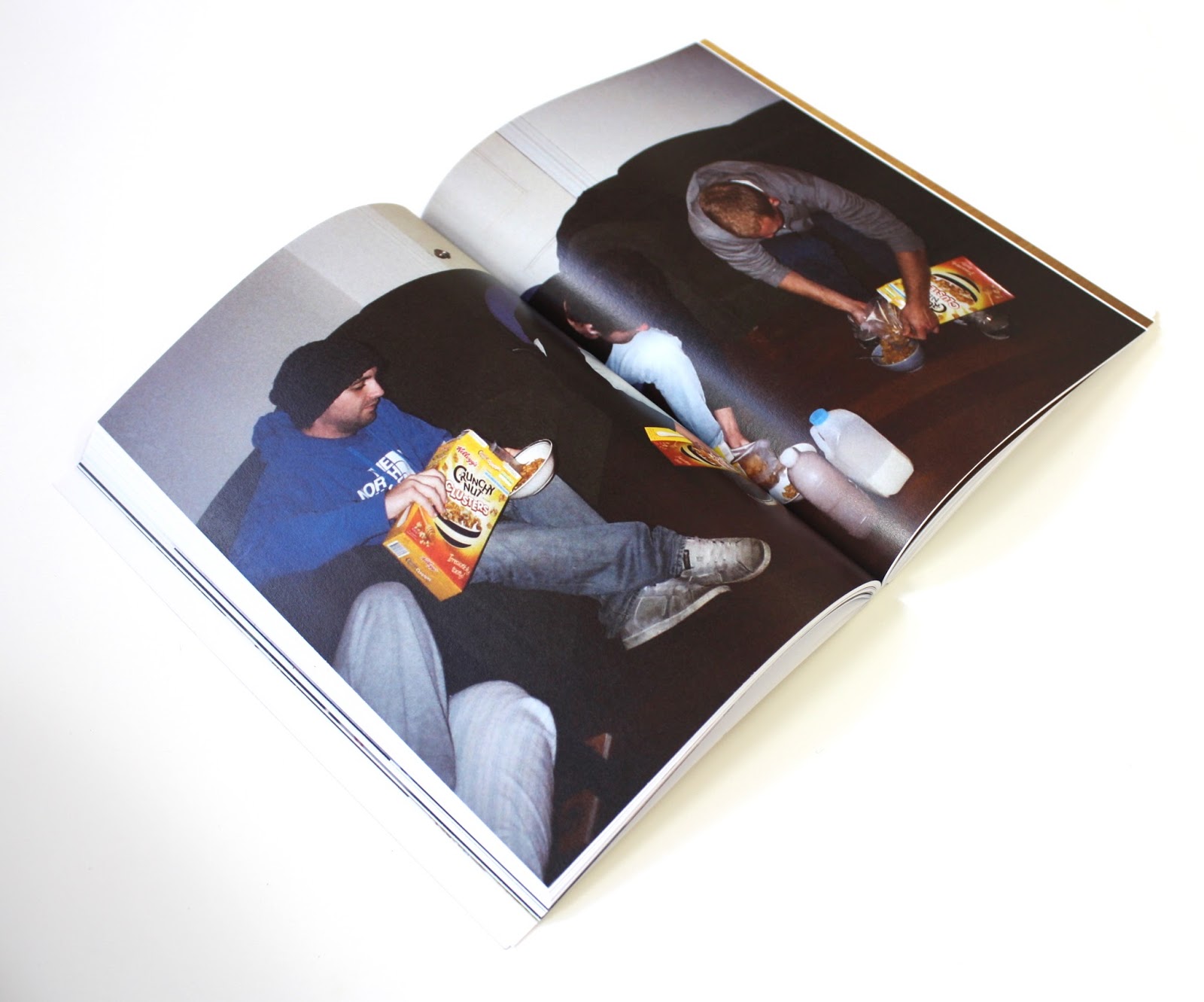 |
| Photo by Jacqui Margetts |
 |
| A foreward, which was also the abstract for the show. (Accompanying illustration by Jacqui) |


 |
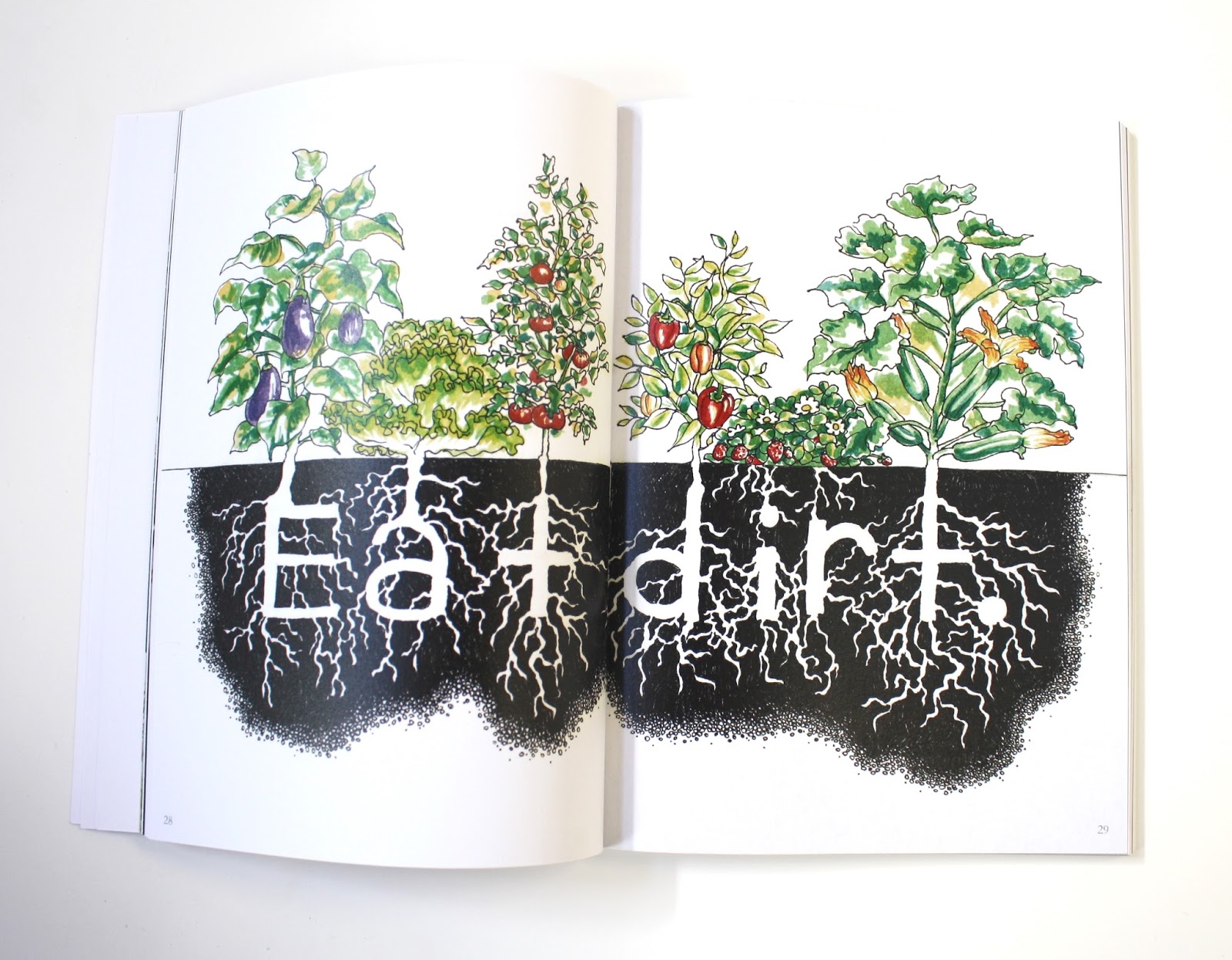
| A personal story/article that I wrote about food waste in the hospitality industry |


Michiko Kon “Octopus and Melon” (1989)/Courtesy Robert Mann Gallery

Michiko Kon: Still Lifes presents this unique artist's photographs of the impossible objects she has created in her studio. These objects are assembled from fish, flesh, and fowl with a Surrealist sensibility reminiscent of the works of Man Ray and Meret Oppenheim. Michiko Kon's photography deftly makes a permanent record of subjects that only exist temporarily: a garter belt fashioned from fish; a pair of melons covered with octopus tentacles; and a boot made of shrimp, among many other non-delectables. Michiko Kon takes the classic tradition of the still-life photograph and gives it new life through the reanimation of object parts and body parts in new forms. Kon writes: "A fish with legs, a vacuum cleaner turned into an animal, a light bulb turned into a pear, a remote device turned into a living creature...." It is this exchange of the inanimate with the animate that imbues the stillness of her photography with the dynamism of the balance between life and death, the fashionable and the commonplace, being awake and dreaming"Source: "Michiko Kon: Still Lifes" Kon, Michiko, Ryū Murakami, and Toshiharu Ito. New York: Aperture, 1997. Print.


I find the human-animal connection full of paradoxes, but the attempt to understand animals is necessary to truly understand ourselves. Indeed it’s this kind of relationship I’m interested in, and man tends to divide it into categories - pets, barnyard animals, animals to be eaten, to be used for clothing or furnishings - and doesn’t consider its complexity.Brown, Andrew. Art & Ecology Now. London: Thames & Hudson Ltd, 2014.


Peter Doig
Various sources, including scans from library books as well as Google Images.
Lisa Crowley asked me last week what kind of art I look at. My response was that I look at artists who do the exact opposite of what I tend to do. I make small, linear, detailed works. By contrast, my favourite artworks are always big, colourful, gestural, messy. Like Doig’s.
Does that signify something? Does it mean I should try breaking out of my comfort zone? I’m not sure, but I would kill to make art like this.
Books referenced:
Peter Doig (Adrian Searle; Kitty Scott; Catherine Grenier. London : Phaidon 2007.)
Peter Doig : no foreign lands (Parinaz Mogadassi; Jeff Alford; Hilton Als; Michael Werner (Gallery); Scottish National Gallery of Modern Art.; Montreal Museum of Fine Arts. Montreal : Montreal Museum of Fine Arts ; Edinburgh : National Galleries Scotland ; Ostfildern Germany : Hatje Cantz c2013.)
Peter Doig, blizzard seventy-seven. (Kunsthalle zu Kiel.; Whitechapel Art Gallery.; Kunsthalle Nürnberg.; Contemporary Fine Arts (Gallery)
Bielefeld : Kerber Verlag; Kiel : Kunsthalle zu Kiel ; London : Whitechapel Art Gallery c1998.)

